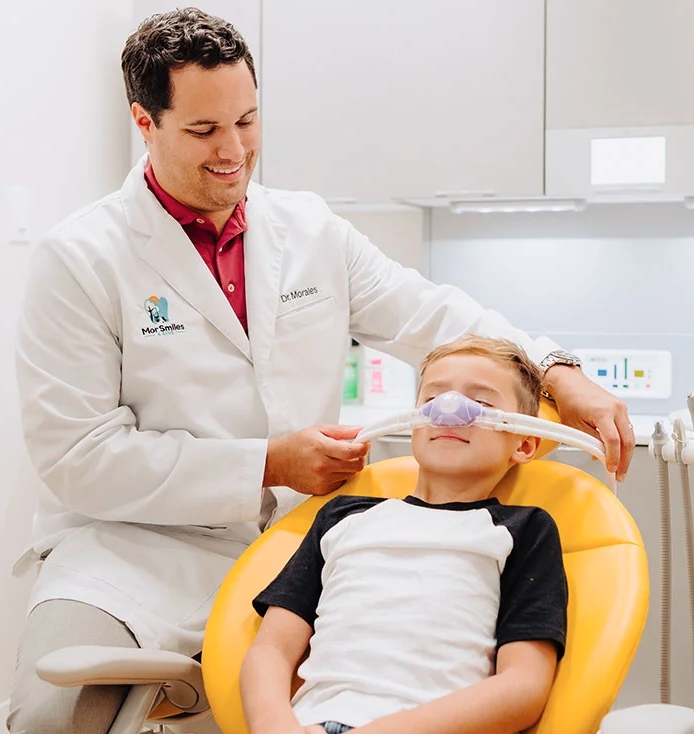
Many children feel nervous about visiting the dentist, which can sometimes result in dental issues that are hard to address later. If your child experiences dental anxiety, sedation dentistry might be the solution. This approach uses safe medications to help young patients relax and stay comfortable throughout their dental visit. Sometimes, sedation dentistry even helps very young children who find it hard to sit still during exams. There are various sedation options available, with nitrous oxide (commonly called laughing gas) being one of the most popular. Dr. Josh Morales is a trusted pediatric dentist specially trained in gentle, effective sedation methods.
Request an AppointmentWhat is sedation dentistry?
Sedation dentistry helps your child’s dentist provide safe, comfortable dental care, especially for children who feel anxious about dental visits. Some of the key benefits include:
- No memory of the procedure afterward
- A distorted sense of time during treatment
- Reduced awareness of smells and sounds
- Relief from fear and anxiety throughout the appointment
Levels of Sedation
Sedation dentistry is carefully regulated, with three main levels your child’s dentist may use: mild sedation, moderate sedation, and deep sedation.
- Mild Sedation — Also known as anxiolysis, this is the lightest sedation level and is often chosen for kids with mild anxiety or for longer, more complex treatments. Mild sedation is usually given orally. Your child may stay awake or feel very sleepy but will breathe normally and feel relaxed. Recovery usually takes a few hours. Nitrous oxide (laughing gas) is another mild to moderate sedation option that helps ease anxiety.
- Moderate Sedation — This is used for children with moderate anxiety or for longer procedures. Often delivered via light IV sedation, your child remains awake but deeply relaxed during treatment.
- Deep Sedation — At this level, your child may drift between consciousness and unconsciousness and typically does not remember the procedure or respond to commands.
How are sedatives administered?
- Inhalation — Nitrous oxide, or laughing gas, is the most common way to ease mild to moderate anxiety. It works quickly, and recovery is fast, so your child can return to normal activities right after.
- Oral — Oral sedation involves taking a prescribed pill about an hour before the appointment, helping your child feel relaxed without the need for needles.
- Intravenous (IV) Sedation — This method isn’t for every child but can help younger or more fearful patients “sleep” through treatment until a trusting relationship is built with Dr. Josh.
Please contact Mor Smiles 4 Kids at (936) 276-6133 in Montgomery, TX to schedule a consultation, learn about sedation options, and find the right approach for your child.
Request an Appointment